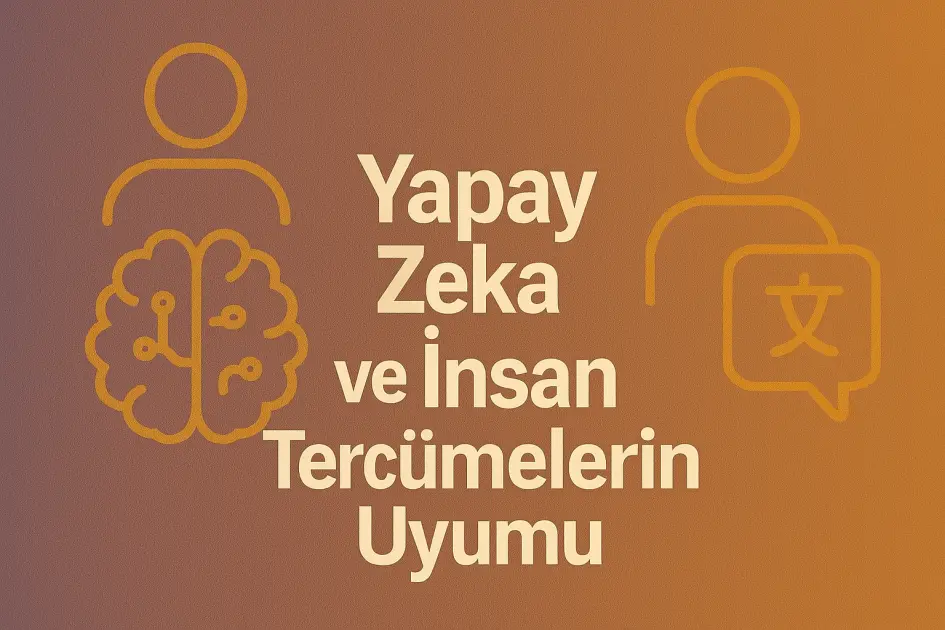
The Harmony Process of AI and Human Translations
Today, artificial intelligence (AI) technologies are bringing about significant changes in the field of language translation. Striking a balance between the capabilities of human translators and the speed and efficiency offered by AI systems plays a very critical role for the future of the translation industry. In this article, we will examine in detail the harmony between AI and human translations, their advantages, and the challenges they face.
The Development Process of AI Translation Systems
AI-supported translation systems have shown remarkable progress in recent years. Thanks to deep learning algorithms and natural language processing (NLP) techniques, translation quality has increased significantly. These systems are making efforts to understand the structure and context of language by training on large datasets.
For example, commonly used AI-based translation tools like Google Translate can translate users' texts instantly and offer services in numerous languages. However, these systems have certain limitations. Especially, their lack of understanding of cultural nuances and context causes them to fall short of the depth provided by human translators.
The Importance of Human Translators
Human translators possess a unique ability to understand the nuances of language and cultural context. Humans translate not only words but also emotions, tone, and context. This is extremely important, especially in sensitive texts such as literary works, marketing materials, and legal documents.
For example, translating a literary work requires the skills of human translators to preserve the author's style and emotional depth. In such texts, AI systems often fall short. Human translators enrich the reader's experience and enhance the impact of the text by capturing the spirit of the work.
Combined Use of AI and Human Translations
The best harmony between AI and human translations is possible by bringing together the strengths of both methods. For example, while AI systems provide fast and efficient translation, human translators can review these translations to perform quality control. This process increases translation quality while also saving time and costs.
Many translation agencies are adopting this hybrid approach and offering more effective solutions by combining AI-supported tools with human translators. This way, it is possible to obtain both fast and high-quality translations. Human translators can perform more complex and in-depth translations by utilizing the efficiency provided by AI systems.
AI and Human Translations in the Future
The development of AI technologies will continue to transform the translation industry. However, the role of human translators will never be completely eliminated. Human creativity, empathy, and cultural understanding are areas that AI systems have not yet reached. Therefore, the experience and knowledge of human translators will always hold an important place in translation processes.
In the future, collaboration between AI and human translators will increase even more, and these two methods will make translation processes more efficient. Trained human translators can contribute to the development of AI systems and help achieve better results. This collaboration will increase translation quality while also creating new opportunities.
Conclusion
The harmony between AI and human translations is critically important for the future of the translation industry. By bringing together the strengths of both methods, it is possible to achieve higher quality and more effective translations. While AI systems provide speed and efficiency, human translators increase translation quality by preserving cultural context and emotional depth. Therefore, collaboration between AI and human translations will continue to create new opportunities in the field of translation. Human creativity and AI efficiency will further strengthen translation processes and open new horizons in this area.